Yet Remote Control Manufactory specialized in wireless remote control with 20 years of experience.
Language
Photocell beam sensors have become an integral component in a variety of applications, providing versatile solutions for safety, security, and monitoring purposes.
These sensors operate by projecting an invisible beam of light between a transmitter and a receiver. When the beam is interrupted, it triggers a response, such as sounding an alarm or opening a gate.
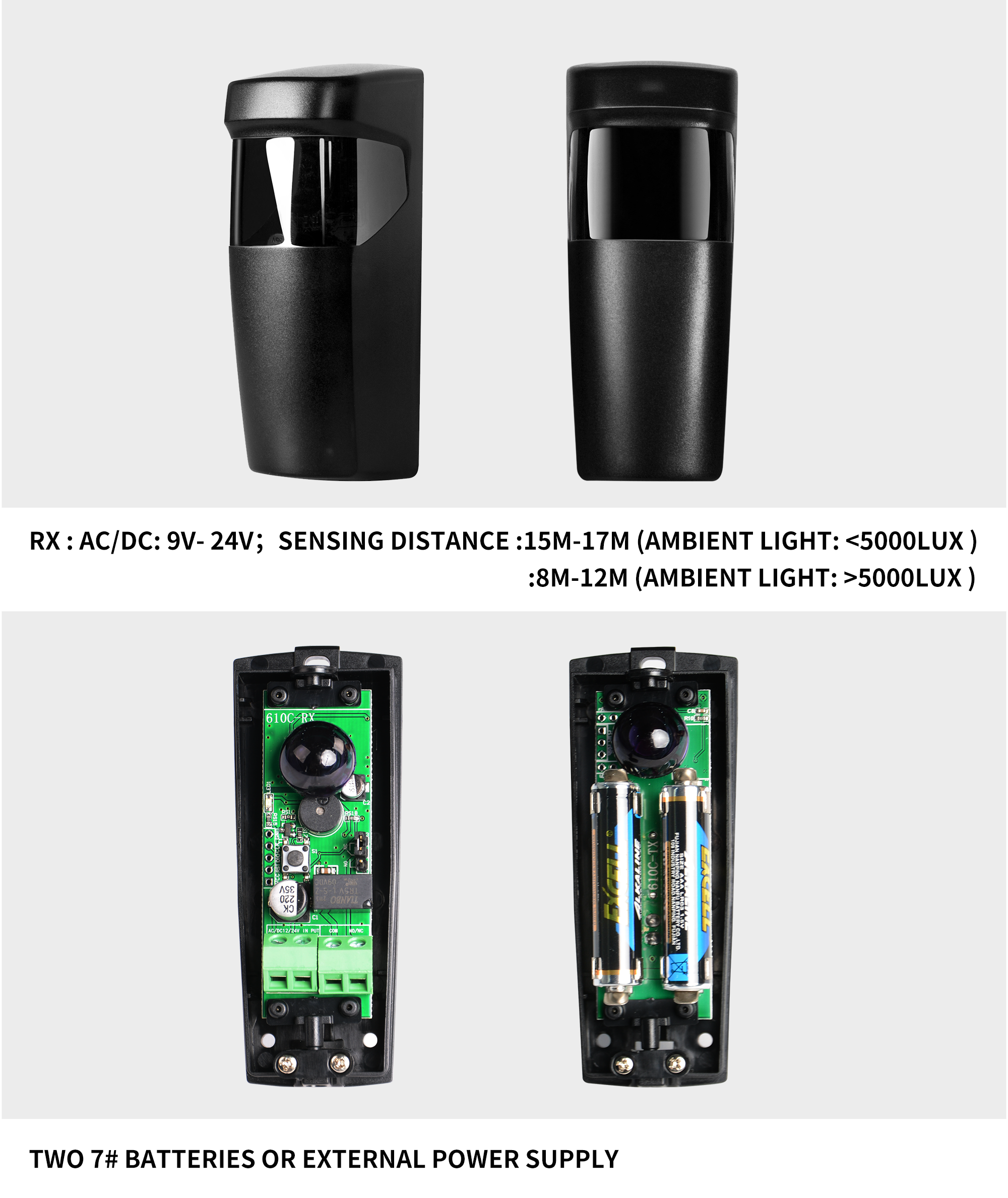
A particular model of interest offers features that enhance its functionality and application range—its printed circuit board (PCB) can be rotated, it has a low battery warning system, control distance capabilities between 15 to 17 meters, and flexibility in power source options, including external power supply or batteries with a standby time of 130 days.
1.One of the key application areas for photocell beam sensors is in security systems.
They are commonly used in perimeter protection. By setting up a series of these sensors along a boundary, they can detect any unauthorized access when the beam is broken, thereby alerting security personnel or triggering a security protocol. The sensor’s rotational PCB board allows for precise alignment, which is critical in ensuring that the beam does not experience false alarms due to environmental conditions like wind or movement of nearby objects.
2. Another essential application is in automating doors and gates. Photocell beam sensors are often employed in access control systems, where they ensure that doors open only when a valid entry is detected. This not only enhances security but also provides convenience and energy efficiency, as doors open and close automatically based on actual use rather than being left open. The sensor’s impressive control range of 15 to 17 meters provides ample flexibility in installation, allowing it to be used in various architectural settings.
3. In industrial environments, photocell beam sensors play a crucial role in safeguarding machinery.
They are employed to ensure that equipment only operates when it is safe to do so. By placing these sensors strategically around machinery, they can help prevent accidents by shutting down equipment if a worker inadvertently enters a dangerous area. This application leverages the sensor's ability to provide timely warnings when the beam is interrupted.
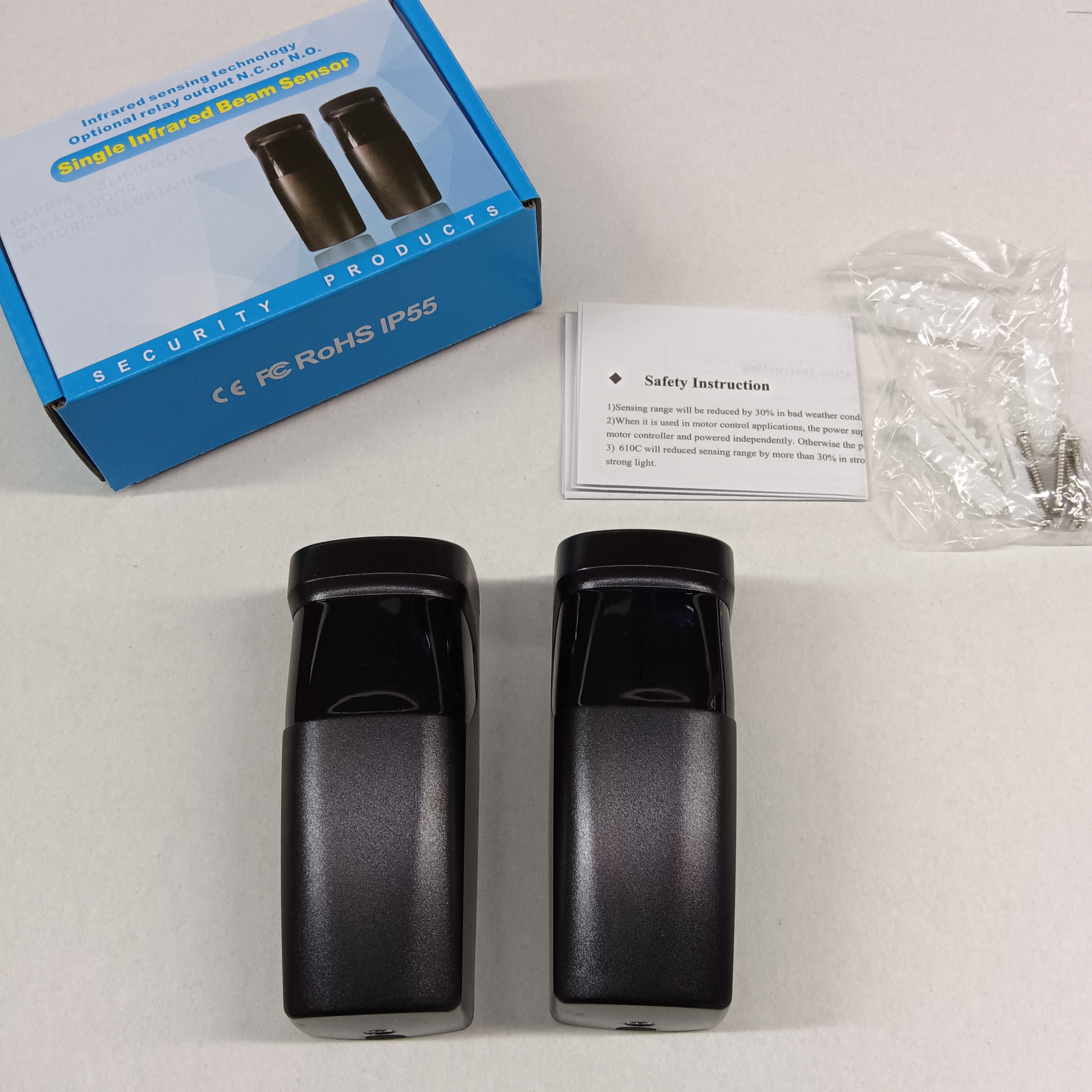
4. Furthermore, in the realm of smart home applications, photocell beam sensors can be integrated into overall home automation systems to enhance convenience and safety.
They can be used to control lighting, triggering lights to turn on when someone enters a room and off when the space is unoccupied. The sensor's low battery warning feature ensures that users are alerted when maintenance is needed, thus maintaining the reliability of the system.
5. These sensors are also highly beneficial in the field of energy management.
By integrating them into lighting and HVAC systems, businesses and homeowners can reduce energy waste by ensuring these systems only operate when necessary. The option to power the sensors either through an external power supply or batteries allows for flexible installations, critical in locations where traditional power outlets may not be readily available.
6.The expansion of these sensors' application scenarios is further facilitated by their technological features.
The option to choose between external power supply or batteries extends their versatility. For temporary setups or in areas with frequent power outages, the battery option is invaluable, ensuring continuous operation without interruption. With a standby time of 130 days, users can rely on the sensor's functionality over extended periods without needing frequent maintenance.
Conclusion
Photocell beam sensors with advanced features such as a rotatable PCB, low battery warnings, and flexible power sources provide a versatile tool for a wide range of applications.
Whether enhancing security in perimeter fencing, providing automated access control, safeguarding industrial equipment, or integrating into energy-efficient smart home systems, these sensors offer reliable and efficient solutions.
Their ability to operate with minimal power requirements and adaptability to various environments makes them an excellent choice for modern, interconnected systems, ensuring safety, efficiency, and convenience across diverse fields.